
Breaking the silence with grace. Confronting abuse with strength.
Turning pain into purpose. Breaking Cycles. Honoring Every Life.
We stand with survivors of domestic violence and mothers navigating pregnancy loss—offering a space for healing, remembrance, and hope.
-
Founded by domestic abuse survivor and mother Nyzinga West, the Nyani J. Thomas Legacy Foundation was created from a place of deep loss and resilience. After experiencing trauma and heartbreak, Nyzinga made a promise—to turn her pain into purpose and create a space where others would feel seen, supported, and never alone.
"She was my miracle. Now she is my mission."
-
We believe healing is not one-size-fits-all. At the Nyani J. Thomas Legacy Foundation, our approach is rooted in compassion, understanding, and lived experience
We meet people where they are—with no judgment, only love.
-
At the Nyani J. Thomas Legacy Foundation, we serve individuals and families navigating some of life’s most difficult moments. Our community is built on compassion, understanding, and shared experiences.
We support:
Survivors of Domestic Violence
Women at any stage of their journey—whether you are seeking safety, healing, or rebuilding your life.Mothers Experiencing Pregnancy Loss
Those grieving miscarriage, stillbirth, or infant loss, and in need of support, remembrance, and care.Grieving Families
Partners, siblings, and loved ones who are also impacted by loss and deserve space to heal.Women Seeking Healing & Self-Care
Those carrying emotional pain who are ready to begin or continue their healing journey.Supporters & Advocates
Individuals who want to give back, raise awareness, and stand beside survivors and grieving families.
No matter where you are in your journey, you are seen, you are supported, and you are not alone.
Our Journey
The Nyani J. Thomas Legacy Foundation was founded by Nyzinga West, a domestic violence survivor and mother, who transformed her personal experiences of trauma and loss into a mission of healing and hope. Our foundation is dedicated to honoring the lives affected by pregnancy loss and domestic violence, and to creating a space where grief is met with compassion, and survivors are met with support.
We understand the profound impact of loss and abuse because we have lived it. Through our programs, memorial initiatives, and awareness campaigns, we provide resources, education, and a safe community for those navigating the complex journey of healing. We are committed to breaking cycles of trauma, amplifying voices that have been silenced, and fostering resilience for future generations.
At the heart of the foundation is a simple truth: every life matters, every story deserves to be honored, and every survivor has the power to transform pain into purpose.
"She was my miracle. Now she is my mission."
— Nyzinga West

Nyzinga West is a woman of strong spirituality, deep integrity, transparency, and unshakable resilience. Born in Santa Barbara, California to two Chicago natives, she was raised between the warmth of California and the grounding of Chicago’s rich family and community ties. A proud alumna of The Piney Woods Country Life School in Mississippi, her leadership journey was shaped early by discipline, service, and cultural pride.
She studied Communications at West Virginia State University and later built a career in Student Affairs at Spelman College and Kennesaw State University, where she nurtured students of color through mentorship and global experiences. Her love of travel has taken her across six continents, fueling her passion for cultural exchange, connection, and education.
In May 2024, her life changed forever. At 38 weeks pregnant, Nyzinga lost her first daughter, Nyani Journey Thomas, to stillbirth. After suffering two miscarriages, Nyani was a miracle—deeply wanted, deeply loved, and intentionally created through IUI/IVF therapy. She was not just a pregnancy—she was a promise, a prayer, and a dream fulfilled.
“She was my miracle. Now she is my mission.”
During her pregnancy, beginning in the third month, Nyzinga endured multiple attacks of domestic battery at the hands of Nyani’s father. She was faced with a reality she could no longer ignore. What had once felt safe revealed itself to be something entirely different. What should have been a sacred time of life and love became a period marked by fear, control, isolation, coercion, manipulation, infidelity, and silence. She was carrying her daughter while surviving domestic abuse—holding onto hope while being deeply hurt.
After enduring a physically and emotionally abusive pregnancy, compounded by high stress, anxiety and ongoing trauma, Nyani’s heartbeat became a memory, and her life became a legacy carried in love.
There is a unique kind of heartbreak that comes with losing a child you fought so hard to bring into this world. And there is another layer of pain that comes from surviving domestic abuse during that same journey.
She lived both.
For years, she carried that pain —questioning herself, internalizing blame, and trying to make sense of something that was never hers to carry. She endured not only the physical and emotional abuse, but also the repeated narrative imposed on her by Nyani’s father—that she was the cause of it, that her actions somehow justified the harm and his behavior. He was 14 years older than her, a dynamic that further intensified the power imbalance, influence, and control within the relationship.
Like many survivors, she stayed silent—navigating confusion, fear, pregnancy, and deep emotional exhaustion. The manipulation was not always loud; more often, it was subtle, persistent, and deeply disorienting, shaping her reality in ways that were difficult to recognize in the moment.
But over time, the truth revealed what had been carefully and strategically concealed. Nyani’s father had a long history of domestic battery involving other women, and multiple arrests. What once felt deeply personal began to reveal itself as patterned behavior—evidence of a cycle that existed long before her and was never hers to fix.
In that truth, she found clarity. She was never the cause of the abuse, nor the loss. What she endured was not a reflection of her —it was the result of a long-standing cycle of violence and control from a serial abuser.
Silence and gaslighting do not protect—they isolate, distort reality, and erode self-trust. Breaking that silence is not just an act of courage; it is an act of reclamation. Because silence does not protect the victim—it protects the abuser.
Domestic violence often begins or escalates during pregnancy, making it one of the most vulnerable times in a woman’s life. Approximately 1 in 5 women (20%) experience violence during pregnancy from their intimate partner, with up to 30% of abuse cases beginning during this time. Homicide remains one of the leading causes of death for pregnant women, who face an estimated 16% higher risk compared to non-pregnant women.
Through her healing, Nyzinga discovered that her voice has power. What she went through was not meant to break her—it was meant to give purpose to her pain.
When Nyzinga finally made it out of the relationship, survival required more than strength—it required support. She leaned on multiple domestic violence foundations and nonprofits to safely navigate her escape. After reporting the domestic battery to the Chicago Police Department, Nyani’s father’s retaliation escalated, forcing her to seek refuge in a domestic violence shelter.
From there, she had to navigate the complexities of the domestic violence court system, including filing for and maintaining orders of protection—all while grieving and just two months postpartum. Throughout this process, she had to advocate for herself—fighting to have her safety heard, recognized, and taken seriously in spaces where she should have been protected without question.
She moved through systems that did not always respond as they should, often having to repeat her story, push for action, and stand firm in her truth despite exhaustion, grief, and overwhelming circumstances. Even while carrying emotional trauma and the weight of everything she had endured, she refused to be silenced.
Fortunately, a female judge recognized the continuous disregard and violations of the domestic violence act by her abuser and swiftly intervened, granting Nye exclusive possession of their shared residence and removing her abuser until she was able to safely purchase another home..
Through her courage and relentless advocacy, Nyzinga reclaimed her safety and began rebuilding her life. Through this experience, she gained firsthand insight into the deficiencies, gaps, and loopholes within systems meant to protect survivors—systems that can at times delay, minimize, or overlook the urgency of a victim’s reality.
Despite these challenges, the support of organizations like WINGS Program, Family Rescue, and Ascend Justice proved to be critical. Their guidance, advocacy, and resources helped her navigate some of the most difficult and uncertain moments, providing support in ways that made survival—and forward movement—possible when everything felt overwhelming.
When she finally found the strength to share her truth, her family and friends became a source of unwavering support. Their presence, belief in her, and willingness to stand beside her reinforced that she was not alone and never had to carry the weight of her experience in silence again.
That support became a turning point. It not only helped her continue forward—it inspired her to give back. Having walked this path herself, she is deeply committed to paying it forward—supporting victims and survivors as they navigate their own journeys, offering the understanding, guidance, and compassion that can only come from lived experience.
Despite everything, her spirit proved to be unbreakable. But she credits her daughter as her reason—her anchor, her strength, her “something” that kept her going when everything else felt uncertain.
The Nyani J. Thomas Legacy Foundation was created to break that silence.
The foundation exists to honor Nyani’s life by bringing awareness to domestic violence and pregnancy and infant loss, while also standing as a voice for women experiencing domestic violence—especially during pregnancy, when vulnerability increases and protection is critical.
It provides support, resources, and a safe space for women and families navigating both loss and domestic abuse.
Nyani’s life matters. She changed everything. She gave her mother purpose in a way words cannot fully capture. Through her, Nye found her voice.
Through this work, she wants every woman to know:
You are not alone.
You are worthy of safety.
You deserve to be heard.
This is more than a foundation.
This is Nyani’s legacy.
This is a movement to break cycles, to protect women, and to bring light into spaces that have been silent for far too long.
Together, we can turn pain into purpose.
Nyani’s life is the heartbeat behind this work.
With love, resilience, and purpose,
Meet the Founder
A foundation dedicated to honoring Nyani’s life by supporting survivors of domestic violence and raising awareness for pregnancy and infant loss.

Our Mission, Vision & Services
Our Mission
Our mission is to support survivors of domestic violence and mothers experiencing pregnancy loss by providing compassionate care, healing resources, and meaningful ways to honor their stories. Through community, education, and remembrance, we create safe spaces where individuals can grieve, rebuild, and find strength in their journey.
Our Services
Our services are designed to nurture both the heart and the healing process. We offer thoughtfully created self-care products, including bath soaks, oils, candles, and care packages that provide comfort during times of grief and emotional recovery. We also create memory and memorial keepsakes such as custom memory boxes and meaningful jewelry to honor and remember precious lives. In addition, we provide grief support tools like guided journals, affirmations, and healing materials to help individuals process their emotions and navigate loss. Through our work, we connect individuals to trusted domestic violence and pregnancy loss resources, offering both immediate support and long-term guidance. We are also deeply committed to raising awareness through education, storytelling, and advocacy, helping to break the silence and create lasting change.
Our Vision
Our vision is a world where no woman suffers in silence, where every life—no matter how brief—is honored, and where cycles of abuse are broken for future generations. We strive to build a legacy of healing, empowerment, and awareness, ensuring that pain is transformed into purpose and no one walks this journey alone.
Education & Awareness
*
Education & Awareness *
The Psychological and Behavioral Dynamics of Domestic Abuse
Domestic abuse is best understood as a pattern of coercive control, a framework developed by Evan Stark. It refers to a deliberate and strategic course of conduct designed to dominate an intimate partner through isolation, lies, manipulation, deception, and the regulation of everyday life.
Rather than a series of isolated incidents, this pattern functions as an ongoing system of power and control. It often begins subtly—through emotional influence, boundary testing, and dependency-building—and progressively intensifies over time. The abuser may restrict access to support systems, monitor communication, control finances, control the home environment or living arrangements, and undermine the victim’s sense of autonomy and self-worth.
This dynamic encompasses multiple forms of abuse, including psychological, emotional, financial, sexual, and physical harm. Each form works together to reinforce control, creating an environment where the victim’s freedom, safety, and identity are systematically eroded.
According to the Centers for Disease Control and Prevention, intimate partner violence affects millions annually in the United States, with approximately one in four women experiencing severe abuse during their lifetime. These patterns are associated with long-term physical health conditions, psychological trauma, and an increased risk of fatal outcomes.
A critical and often overlooked reality is that many individuals do not recognize they are in an abusive relationship until the pattern is already deeply established. The progression is gradual, often beginning with subtle shifts in behavior that can be mistaken for care, protection, or deep emotional investment. Periods of attention, affection, and perceived stability can mask underlying control, making the relationship appear functional or even loving from the outside.
Over time, this intermittent reinforcement strengthens emotional attachment and complicates perception. By the time the abuse becomes undeniable, psychological conditioning, emotional dependence, and practical entanglements—such as shared living arrangements, finances, or children—have often taken hold, making it significantly more difficult to identify, confront, or safely leave the situation.
Phase One: Idealization and Attachment Formation (Honeymoon Phase)
The initial phase is characterized by idealization, as described in object relations theory by Otto Kernberg. During this stage, the abusive partner establishes trust and emotional dependency through heightened attention, emotional intensity, and consistent reinforcement.
Common behaviors include rapid intimacy, excessive communication, and strong future-oriented promises. In many documented cases, this phase also includes consistent gift-giving, financial generosity, spontaneous travel, and symbolic gestures of commitment, all of which function as powerful reinforcement mechanisms.
Additional behaviors often present in this phase include love bombing, where overwhelming affection, compliments, and validation are used to accelerate emotional closeness. There may also be mirroring, in which the abusive partner reflects the victim’s values, interests, and desires to create a false sense of deep compatibility. Early boundary testing can occur subtly—such as pushing for more time, faster commitment, or increased emotional disclosure—while still appearing attentive or caring.
These behaviors are not incidental; they contribute to psychological investment and perceived security, making the relationship feel stable, intentional, and even “fated.” The intensity of this phase can create a sense of uniqueness, leading individuals to believe they have found an unusually deep or rare connection.
From a neurobiological standpoint, this phase activates dopamine-driven reward pathways and oxytocin-based bonding systems, strengthening attachment while reducing skepticism and critical evaluation. The brain begins associating the partner with pleasure, safety, and emotional fulfillment.
Cognitively, individuals may begin to form positive bias and selective attention, focusing on affirming behaviors while overlooking inconsistencies or early warning signs. Subtle red flags—such as possessiveness framed as protection, jealousy framed as love, or urgency framed as passion—may be minimized or reinterpreted.
Socially, this phase can also include early isolation disguised as closeness, where increased time spent together gradually reduces outside interactions with friends or family. This is often perceived as deep bonding rather than a restriction of independence.
As a result, individuals often do not perceive risk during this phase. Instead, the relationship is experienced as deeply meaningful, emotionally fulfilling, and aligned with long-term desires—laying the psychological foundation that makes later patterns of control more difficult to recognize and resist.
Phase Two: Devaluation and Coercive Control
Following attachment formation, the relationship transitions into devaluation, where control, instability, and psychological manipulation begin to emerge. This phase aligns with the coercive control model and is supported by extensive clinical research.
Behaviors may include isolation from support systems, persistent criticism, emotional withdrawal, and increasing unpredictability. Over time, the abusive partner may begin to undermine confidence through subtle insults, comparison to others, infidelity, or dismissive behavior, gradually shifting the emotional tone of the relationship. There is often a noticeable contrast from the intense affection of the earlier phase to inconsistency, confusion, and emotional distance.
Control may expand into multiple areas of life, including monitoring communication, questioning whereabouts, controlling finances, dictating appearance or behavior, and regulating daily routines. In some cases, individuals may be pressured into living arrangements that increase dependency and reduce autonomy, further limiting their ability to maintain independence or seek support.
Additional dynamics often emerge during this phase, including gaslighting, where reality is denied or distorted, and projection, where the abusive partner attributes their own behaviors—such as dishonesty or infidelity—to the victim. There may also be triangulation, involving third parties to create jealousy, competition, or insecurity, further destabilizing the victim’s sense of safety and clarity.
Importantly, harmful behaviors are frequently followed by apologies, temporary behavioral changes, or material gestures such as luxury gifts, financial compensation, travel, or flowers. These moments of repair can feel sincere and convincing, reinforcing hope that the relationship can return to its earlier state.
These patterns reflect intermittent reinforcement, a powerful conditioning mechanism in which unpredictable rewards strengthen emotional attachment. The cycle of harm followed by repair attempts creates confusion, disrupts emotional stability, and reinforces continued engagement.
The American Psychological Association notes that prolonged exposure to such dynamics can impair judgment, reduce self-trust, and increase reliance on the abusive partner. Over time, individuals may begin to question their own perceptions, minimize harmful behaviors, rationalize the abuser’s actions, or internalize blame—further deepening the cycle of control.
Phase Three: Escalation, Discard, and Psychological Entrapment
As the pattern becomes established, abusive behaviors often escalate in intensity. This phase may include emotional aggression, intimidation, financial retaliation, and physical violence.
The abusive partner may exhibit “Dr. Jekyll & Mr. Hyde” behavior, rapidly shifting between cruelty and affection. Periods of rejection may be followed by attempts to pull the victim back through promises, apologies, or renewed affection.
Smear campaigns are also common, where the victim is portrayed as unstable or untrustworthy to others. This isolates the individual further and undermines their credibility.
A consistent pattern is the abuser’s attempt to prevent outside intervention, including:
Pleading or urging the victim not to contact law enforcement
Minimizing or denying the severity of abuse
Making immediate promises to change after harm
This stage is also where DARVO (Deny, Attack, Reverse Victim and Offender), a concept identified by Jennifer Freyd, is frequently observed. The abusive individual may deny the behavior, attack the victim’s credibility, and then position themselves as the victim while portraying the actual victim as the offender.
These behaviors reflect externalization of responsibility and are designed to maintain control while avoiding accountability.
Cognitive and Behavioral Consequences
Sustained exposure to coercive control is associated with learned helplessness, a concept identified by Martin Seligman. Individuals may begin to believe that efforts to change or leave will not be effective, even when options exist.
Gaslighting contributes to cognitive destabilization by repeatedly challenging memory, perception, and reality. Over time, individuals may question their own judgment and increasingly rely on the abusive partner’s version of events.
This process leads to identity erosion, diminished autonomy, and impaired decision-making capacity, reinforcing the cycle of control.
Trauma Bonding and Reinforcement Patterns
The cyclical nature of abuse contributes to trauma bonding through alternating stress and reward responses.
Periods of harm elevate stress hormones such as cortisol, while reconciliation phases trigger dopamine release, creating relief and reinforcing attachment. This mirrors reinforcement patterns seen in addictive processes.
The cycle of abuse, as outlined by Lenore E. Walker, includes tension building, incident, reconciliation, and calm. The reconciliation phase often involves visible attempts to “fix” the situation—such as apologies, promises, or gifts—without addressing the underlying pattern of control.
Public Image vs. Private Reality
A critical and often misunderstood aspect of domestic abuse is the discrepancy between public perception and private behavior. Many abusive individuals are perceived as charming, successful, and well-respected—often viewed as pillars of their communities.
They may maintain strong reputations professionally and socially, demonstrating kindness, generosity, and stability in public settings. This contrast is not accidental—it serves as a protective layer that makes allegations of abuse less likely to be believed.
Abusive behavior is frequently targeted and selective, reserved for the person closest to them. This controlled presentation allows the abuser to preserve their image while maintaining dominance in private. For victims, this creates an additional layer of isolation and disbelief, as others may struggle to reconcile the public persona with the private harm.
A widely recognized fictional depiction of these dynamics can be found in The Housemaid, which illustrates how manipulation, control, and hidden abuse can exist beneath a seemingly normal or even ideal exterior.
Abuse During Pregnancy: Escalation and Vulnerability
Research consistently shows that pregnancy is a high-risk period for the onset or escalation of abuse. In fact, studies cited by the Centers for Disease Control and Prevention indicate that a significant number of women experience intimate partner violence during pregnancy, with some cases beginning for the first time during this period.
There are several reasons for this pattern:
Increased vulnerability: Pregnancy can create physical, emotional, and financial dependence, which an abuser may exploit.
Loss of control: The abuser may perceive the pregnancy as a shift in attention or control, triggering increased efforts to reassert dominance.
Entrapment: The presence of a child can deepen long-term ties, making it more difficult for the victim to leave.
Jealousy and resentment: Some abusers exhibit jealousy toward the unborn child or resentment over changing dynamics.
Tragically, violence during pregnancy is associated with severe outcomes, and homicide is one of the leading causes of death among pregnant women in the United States.
This stage reflects a critical escalation point where control intensifies, and risk significantly increases.
Recognition and Entrapment
A defining characteristic of abusive relationships is delayed recognition. Many individuals do not fully understand the nature of the abuse until it has significantly escalated.
By that stage, multiple forms of entrapment are often present:
Emotional attachment
Psychological conditioning
Housing or home stability
Financial dependence
Social isolation
These overlapping factors make leaving complex and, at times, dangerous.
Safe Exit Considerations
Research consistently identifies the period surrounding separation as the highest-risk phase for severe or lethal violence. Leaving an abusive relationship requires careful planning and risk assessment.
Attempts to leave may trigger intensified behaviors, including emotional appeals, promises of change, increased affection, or renewed gift-giving. These should be understood as part of the established pattern of coercive control.
Individuals are often discouraged from seeking outside help, including contacting law enforcement or support services, as a means of maintaining isolation.
Effective safety planning includes secure communication, limited disclosure of intent, and coordination with trained professionals. Access to advocacy services, shelters, and legal support significantly improves safety outcomes.
Conclusion
Domestic abuse is a structured and evidence-based pattern of behavior rooted in control. It is not defined by isolated incidents, but by cumulative strategies that alter perception, restrict autonomy, and reinforce dependency.
A defining reality is that many individuals do not recognize the full extent of the abuse until they are already deeply involved. This delayed awareness is a direct result of the psychological and behavioral mechanisms at play.
Understanding these dynamics is essential for effective intervention, survivor support, and long-term prevention.
Safety Planning & Survival Guide
For Women Navigating Domestic Abuse
Leaving an abusive relationship is not just a decision—it is a process that requires planning, awareness, and protection. Your safety matters, and taking thoughtful, strategic steps can make a critical difference. This guide is here to help you move carefully, intentionally, and safely.
Trust Your Instincts
If something feels off, unsafe, or escalating—trust that feeling. You do not need proof or validation to prioritize your safety.
Keep Your Plan Private
Do not share your plan to leave with the abusive partner or anyone who may communicate with them. The most dangerous time is often when an abuser senses a loss of control. Move quietly and strategically.
Prepare Important Documents
If possible, gather and keep copies of essential items in a safe place or with someone you trust:
Identification (ID, driver’s license, passport)
Birth certificates (yours and your children’s)
Social Security cards
Medical records
Bank information and insurance documents
If you cannot take originals, take photos or store digital copies securely.
Secure Finances & Plan Ahead
Set aside emergency cash whenever possible
Open a separate bank account in your name only
Save for a “rainy day” fund—even small amounts add up
If necessary, act normal and avoid raising suspicion while you prepare
Financial preparation can create options when you need them most.
Pack an Emergency Bag
Keep a bag hidden or with a trusted person that includes:
Clothing
Medications
Toiletries
Copies of documents
Extra keys
A prepaid phone if possible
This allows you to leave quickly if needed.
Document Everything
Keep records of incidents whenever it is safe to do so:
Take photos of injuries or damage
Save threatening messages, voicemails, and emails
Write down dates, times, and details of events
Many abusers will try to claim you are “crazy,” lying, or making things up. Documentation can protect you, support your case, and help establish patterns of abuse.
Know Your Rights
You have legal rights—even if the home is in the abuser’s name. In many cases, you can request exclusive possession of the residence through the court as part of an order of protection, which can legally require the abuser to leave the home until you are able to safely relocate.
Do not assume you have to leave everything behind. Speak with an advocate or legal professional to understand your options and protections.
Create a Safe Exit Plan
Identify safe times to leave (when the abuser is not present or distracted)
Know your exits (doors, windows, safest routes out)
Avoid high-risk areas like kitchens or bathrooms during conflict
Plan where you will go ahead of time (friend, shelter, hotel)
Use Safe Communication
Use a secure phone or device if possible
Clear browser history when researching help
Turn off location sharing on apps and devices
Consider creating a new email for safety planning
Build a Support System
You do not have to do this alone. In addition to shelters and advocates, we have a network of women ready to help you rebuild and relocate safely, including:
Realtors
Mortgage lenders
Moving companies
Credit repair specialists
Tax preparers
Counselors and therapists
Advocates
Life insurance agents
Daycare providers
Educators
Landlords
And other trusted professionals
These resources can help you transition into a safer, more stable environment when you are ready.
Legal Protection
Consider seeking an order of protection (restraining order). Keep copies with you at all times and provide them to trusted individuals, your workplace, and your child’s school if applicable.
If You Have Children
Teach them how to call for help in an emergency
Avoid sharing your plan with them if it could put them at risk
Pack essentials for them as well
After You Leave
Change passwords (email, banking, social media)
Consider changing your phone number
Notify trusted contacts and workplaces
Continue documenting any contact or harassment
Important Reminder
Leaving is not always immediate—and that’s okay. Planning carefully is not weakness, it is strategy. Moving in silence, saving, documenting, and preparing are all acts of protection. Stand in your feminine divine power and dig deep for the courage within yourself—you are stronger than what you are facing, even if it does not feel that way right now.
You Are Not Alone
What you are experiencing is real. Your safety matters. Your life matters.
You deserve to live without fear.
You deserve peace.
You deserve protection.
Need Support?
Contact us for more support and direction. We have many trusted resources and a network of support ready to help you navigate your situation safely and confidently. You do not have to figure this out alone—we are here to help guide you every step of the way.
If you are in immediate danger, call 911.
For confidential support, contact the National Domestic Violence Hotline (1-800-799-7233) or visit thehotline.org.
Be smart. Be strategic. Move with intention. Plan your exit. Your safety comes first.
Get Help & Resources
If you are in immediate danger, please call 911. National Domestic Violence Hotline Call: 1-800-799-7233 Text: START to 88788 Chat available online 24/7 confidential support
Loveisrespect Call: 1-866-331-9474 Text: LOVEIS to 22522 Support for young people experiencing relationship abuse
Postpartum Support International
Call or Text: 1-800-944-4773
Support for pregnancy loss, postpartum depression, and emotional wellness
RAINN
Call: 800-656-HOPE
Confidential support and resources
Share Pregnancy & Infant Loss Support
Community support, remembrance events, and resources
March of Dimes
Education and support for families experiencing loss
Star Legacy Foundation
Support groups and resources for families navigating stillbirth
Local Support – Chicago Area
WINGS Program, Inc.
24-hour hotline: (847) 221-5680
Provides safe housing, crisis support, counseling, and resources for survivors of domestic violence
Connections for Abused Women and their Children
Hotline: (773) 278-4566
Emergency shelter, counseling, and advocacy services
Family Rescue
24-hour Crisis Line: 800-360-6619
City of Chicago Domestic Violence Hotline: 877-863-6338
Ascend Justice
(312) 325-9155
Legal Advocay at 555 W Harrison St, Suite 1900, Chicago, IL 60607
We can help connect you with trusted shelters, counseling, and resources in your area. Whether you are seeking immediate safety or beginning your healing journey, support is here. You are not alone—and you never have to face this alone again.
Featured Products
In this section, you’ll find a curated collection of items that I personally used during some of my most difficult times. Every product is created with purpose and carries my logo, representing strength, healing, and the story behind this mission.
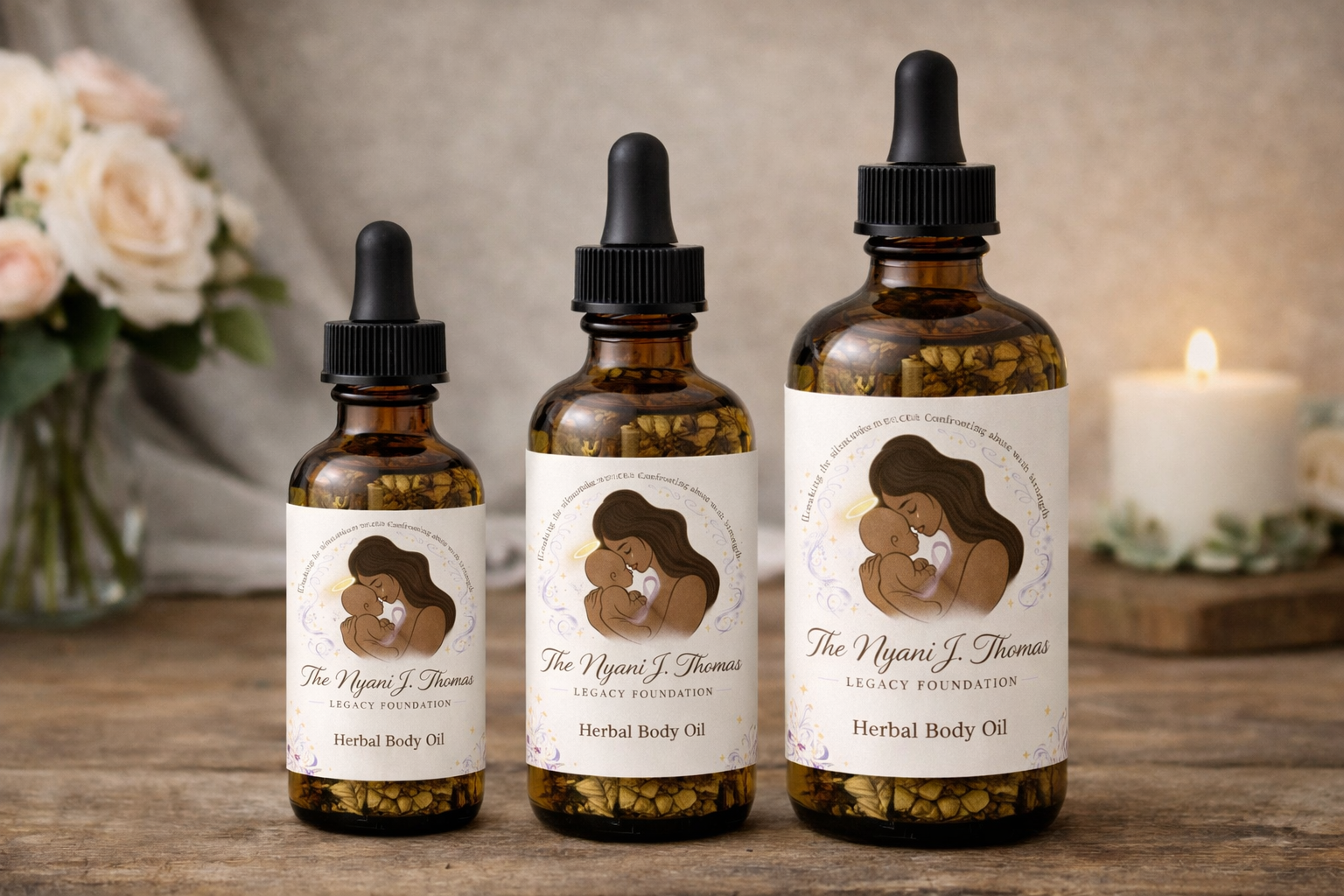
Nourish and cherish your skin with our Herbal Body Oil, designed to infuse your daily routine with tranquility and wellness. Crafted with premium herbal blends for optimal skin nourishment, each bottle is enriched with calendula to support skin healing, lavender to calm and soothe, chamomile to reduce irritation, and rose petals to promote hydration and emotional comfort. Infused with eucalyptus for gentle purification and peppermint for a refreshing, revitalizing touch, this blend is carefully created to restore both body and mind.
Free from harsh chemicals, it ensures a gentle, nurturing experience for all skin types, while our eco-friendly packaging reflects our commitment to both your well-being and the earth.
Nyzinga has carefully crafted these oils to mirror her favorite luxury fragrances—elevating your self-care experience into something truly indulgent. Please select your preferred fragrance to personalize your ritual.
Experience the soothing sensation of natural care and embrace a holistic wellness routine that honors both your skin and your soul.
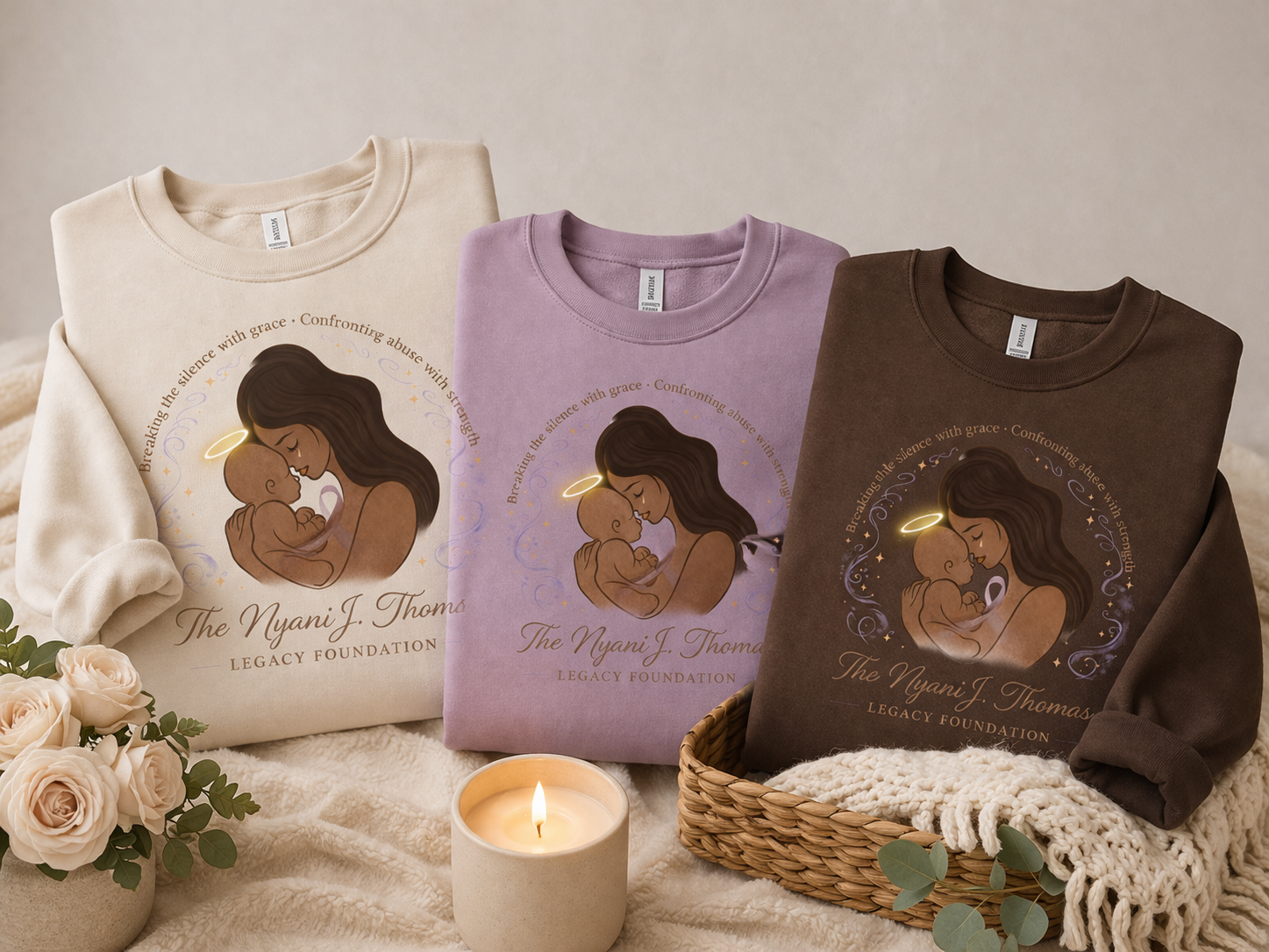
Embrace comfort and strength with our beautifully designed sweatshirts, dedicated to promoting healing and awareness.
Soft, high-quality fabric ensures warmth and comfort.
Features a meaningful design promoting strength and healing.
Available in multiple colors to suit your style preferences.
Wrap yourself in warmth and empowerment with these sweatshirts, crafted for those navigating life's challenges. Each piece serves as a comforting reminder of resilience and support.
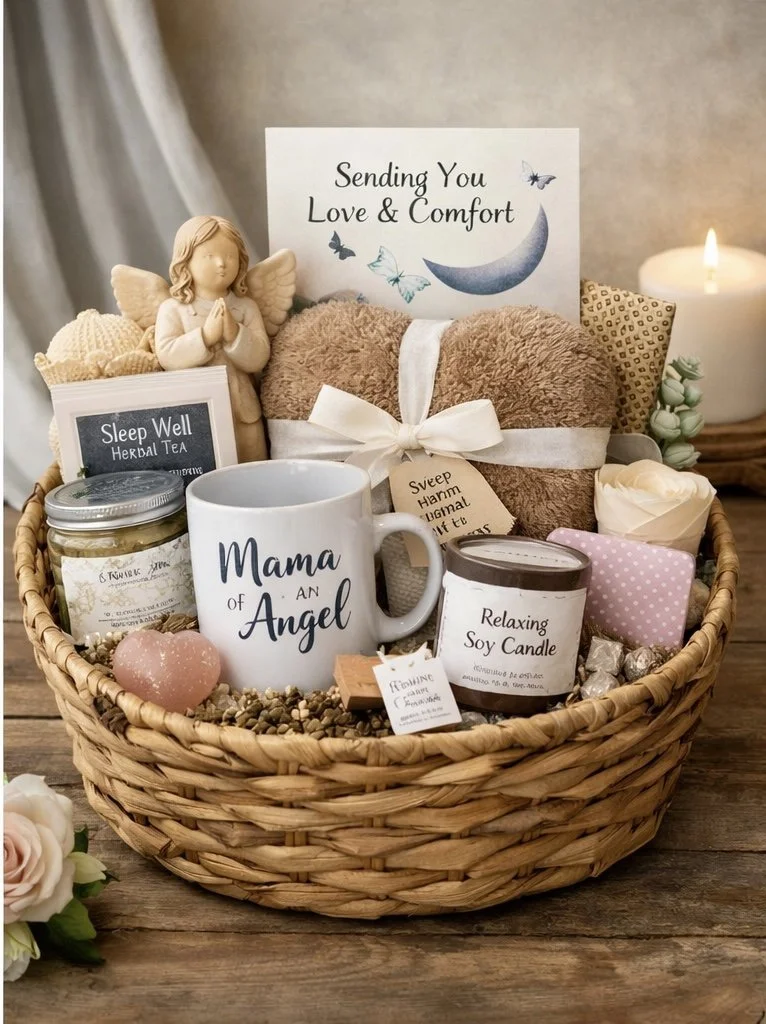
Offer comfort and warmth with our thoughtfully assembled Sympathy Basket, designed to bring solace to those grieving. Each basket is crafted to nurture both body and soul, providing peace in difficult times.
Thoughtfully curated items include a plush pillow, aromatherapy candle, comforting mug, and soothing tea.
Features a heartwarming angel figurine and a heartfelt message card to convey your sympathy.
High-quality, handmade products assembled to provide warmth and solace for grieving loved ones.
This Sympathy Basket serves as a gentle reminder that love and comfort are ever-present, offering a heartening embrace to someone in their time of need.

Discover tranquility and serenity with our handcrafted bath bombs, designed to nurture both body and soul.
Handcrafted with natural ingredients for a relaxing bath experience.
Infused with calming essential oils to soothe the senses.
Beautifully packaged to add a touch of elegance to your routine.
Transform your bath into a sanctuary of relaxation, allowing the soothing scents to wash away stress and embrace a moment of healing.
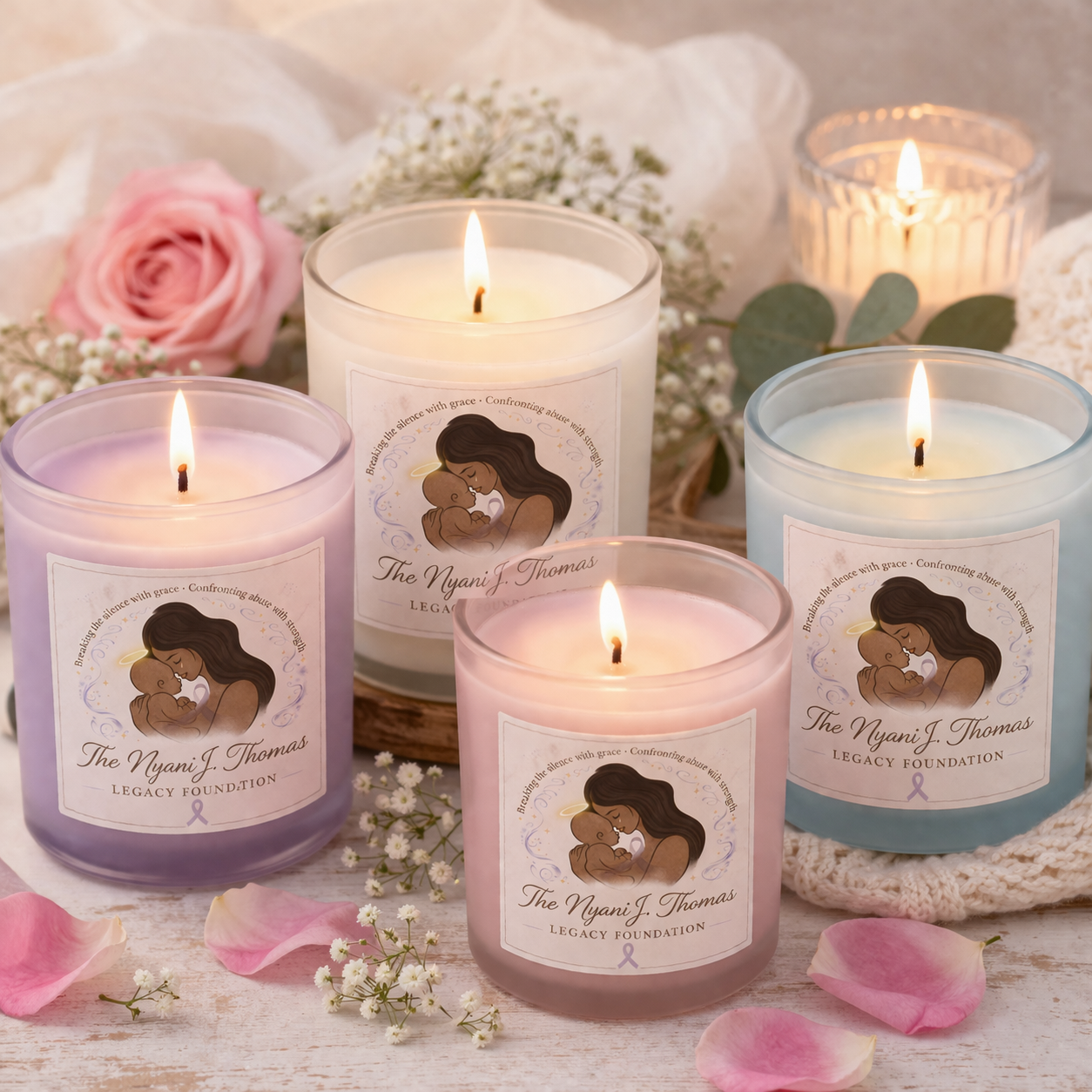
Illuminate your moments with our Fragrance Candles, where serenity meets compassion, creating a beacon of hope for those healing from grief.
Handcrafted with natural soy wax and essential oils for a clean, long-lasting burn.
Available in serene scents that promote relaxation and mindfulness.
Each purchase supports survivors of domestic violence and pregnancy loss.
Transform your space into a sanctuary of peace and comfort, knowing that with each flicker, you're providing hope and healing to those in need.
Blue Candle — “Blue Lotus & Chamomile Calm”
Scent Profile: Blue lotus, chamomile, lavender, soft sandalwood
Aroma Experience: Light, airy, and tranquil with gentle floral and herbal notes that promote relaxation and emotional balance.
Pink Candle — “Rose Petal & Hibiscus Bloom”
Scent Profile: Rose, hibiscus, geranium, vanilla
Aroma Experience: Soft, romantic, and nurturing with delicate floral sweetness and a warm, comforting finish.
Purple Candle — “Lavender Sage Restoration”
Scent Profile: Lavender, clary sage, violet, cedarwood
Aroma Experience: Deeply calming and grounding with herbal richness that supports restoration and inner peace.
White Candle — “White Sage & Eucalyptus Purify”
Scent Profile: White sage, eucalyptus, mint, light citrus
Aroma Experience: Clean, crisp, and refreshing with purifying herbal tones that evoke clarity and renewal.

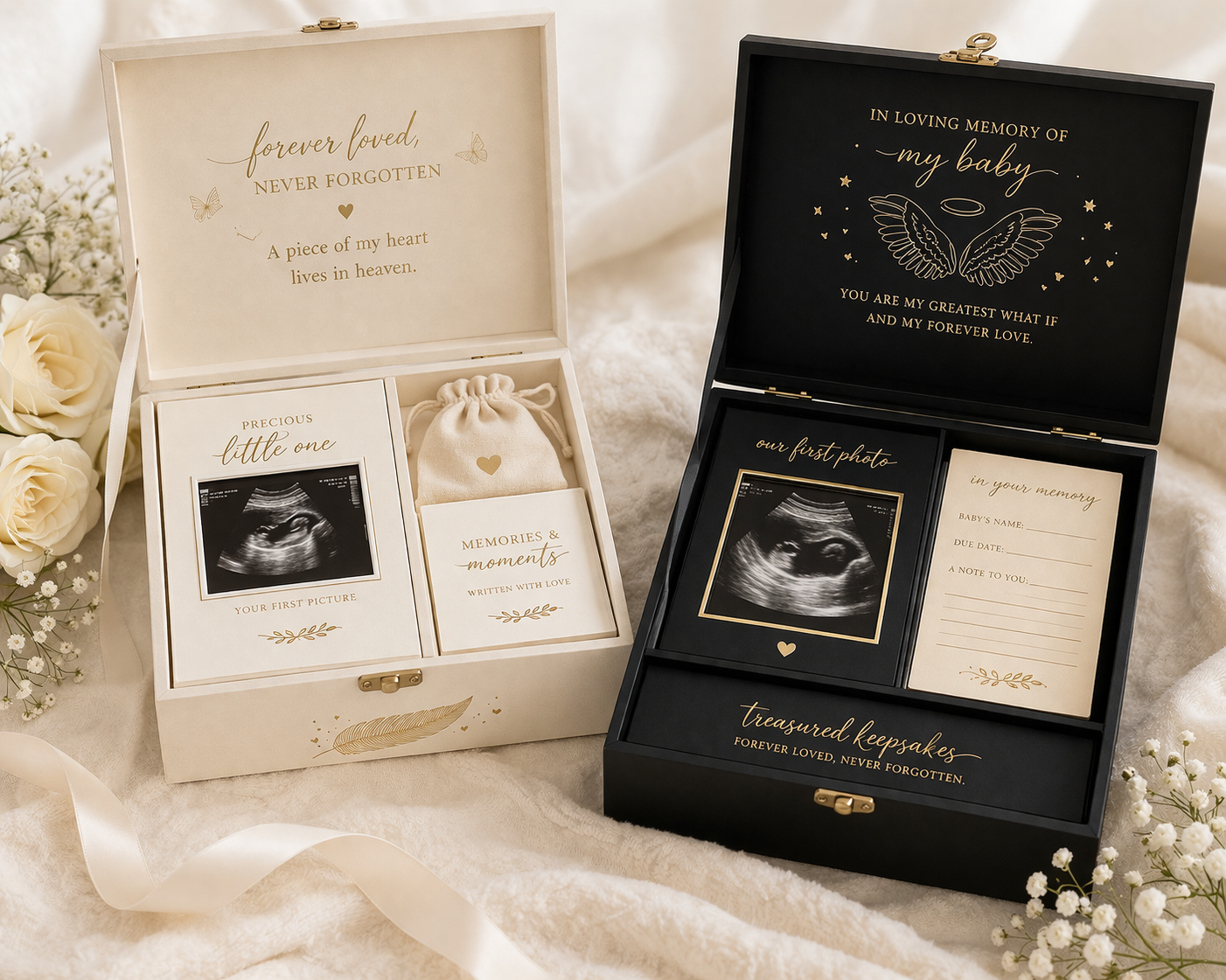
Preserve the cherished memories of your little one with our exquisite Baby Memory Keepsake Box, designed to hold your most heartfelt treasures.
Beautifully crafted wooden box for storing cherished mementos.
Features a special section for ultrasound photos and personal notes.
Lined with soft fabric for added protection and elegance.
Create a lasting tribute to your baby's memory with this elegant keepsake box, helping you hold onto precious moments forever.
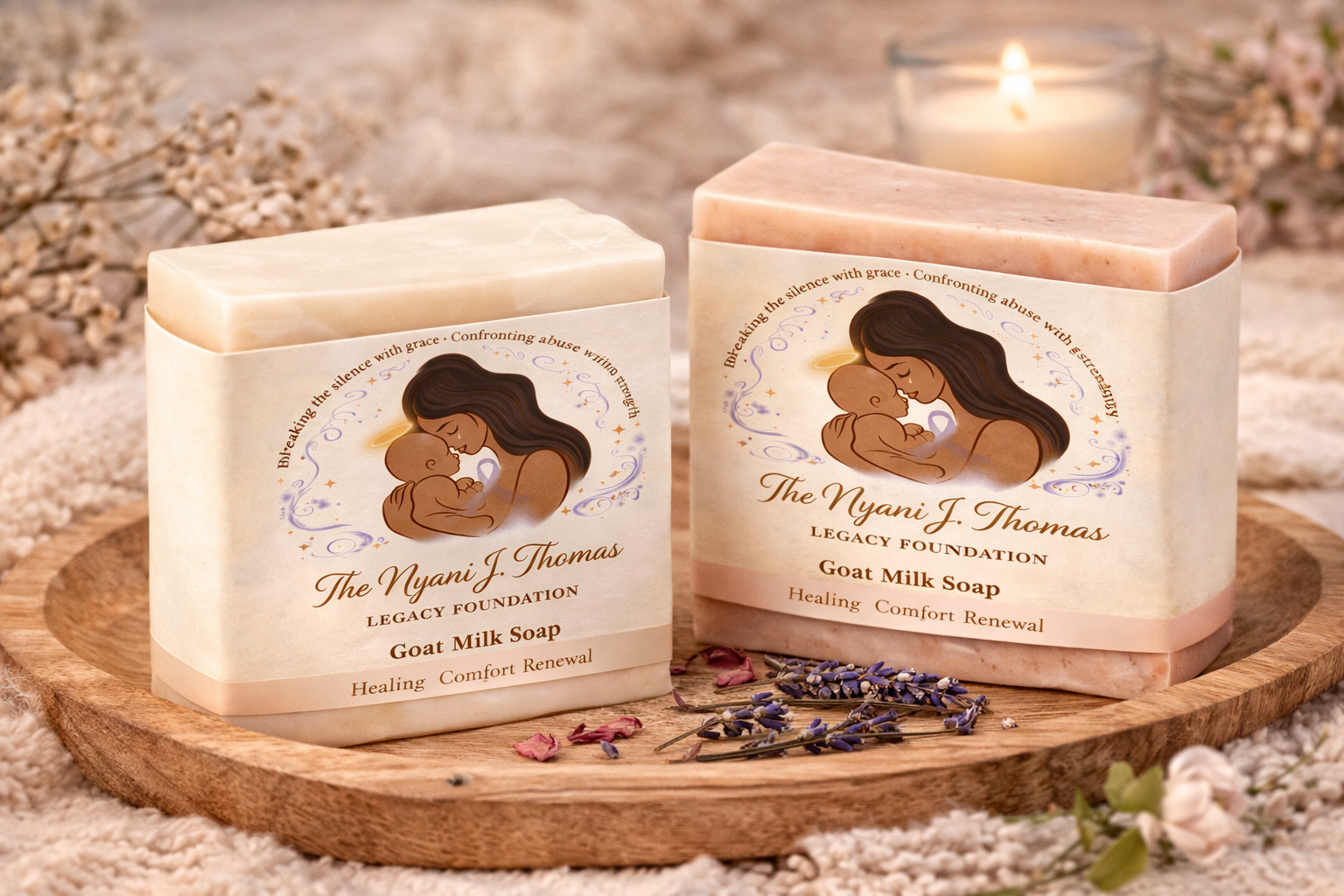
Indulge your skin in the gentle luxury of our Goat Milk Bar Soap, thoughtfully crafted to cleanse, nourish, and restore. Made with rich, creamy goat milk, this bar is deeply moisturizing and naturally soothing—perfect for sensitive, dry, or healing skin.
Infused with the soft floral essence of rose, the calming touch of lavender, and the warm, comforting notes of French vanilla, this blend creates a beautifully balanced scent that relaxes the mind while pampering the body. Each bar is enhanced with skin-loving botanicals—rose petals to hydrate and soften, lavender buds to calm irritation, and natural extracts that support overall skin wellness and renewal.
Free from harsh chemicals, this soap provides a gentle, nourishing cleanse while helping maintain your skin’s natural balance.
By supporting this store, you are not only investing in your own healing, but also contributing to a greater purpose—helping us continue this work, raise awareness, and support others on their journey.